Source IPX7 Waterproof Oral Irrigator for Home, Travel, and Dental Care
Explore 30 models of ipx7 waterproof oral irrigator devices featuring detachable tanks, USB charging, and multiple working modes. Compare specifications like battery capacity, water pulse frequency, and IPX ratings to find the right oral irrigator for your business needs; compare the available evidence and request quotations based on your requirements.
Key considerations
Products List




Comprehensive Sourcing Guide
IPX7 Waterproof Oral Irrigator Sourcing Guide
Procuring an IPX7 waterproof oral irrigator requires distinguishing between devices designed for oral cavity use and those intended for broader household or outdoor applications. The observed market data indicates a mix of product types, including vibrating dental flossers and standard water flossers, with varying reservoir capacities ranging from 240ml to 1000ml. Buyers must carefully verify the specific application context, as some units are explicitly listed for oral use while others claim suitability for outdoor environments, which may imply different durability requirements.
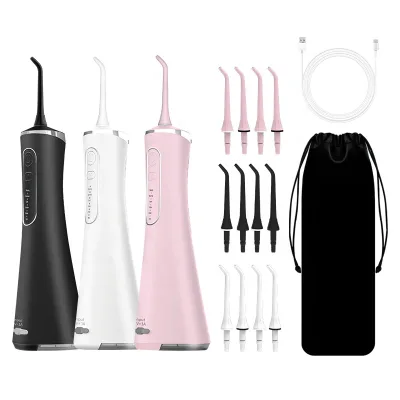
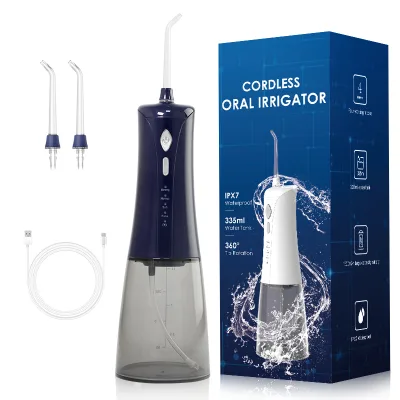
The physical form factor and power source are critical differentiators that influence the final selection for a specific supply chain need. Listings show a prevalence of USB power sources and Type-C charging modes, with battery capacities observed between 1800mAh and 2500mAh. While some models feature detachable water tanks for easier cleaning, others utilize fixed reservoirs. It is essential to confirm whether the device includes a wax coating or is designed without one, as this affects the maintenance routine and the compatibility with specific cleaning solutions.
Product Scope and Observed Listing Signals
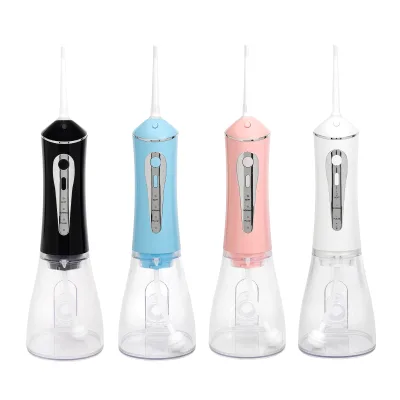
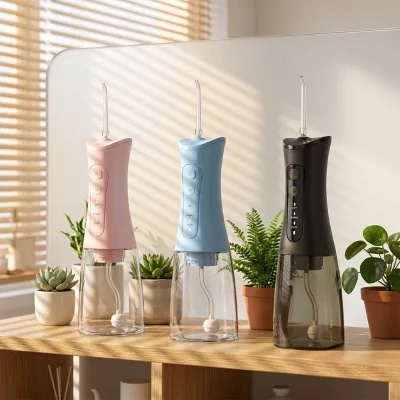
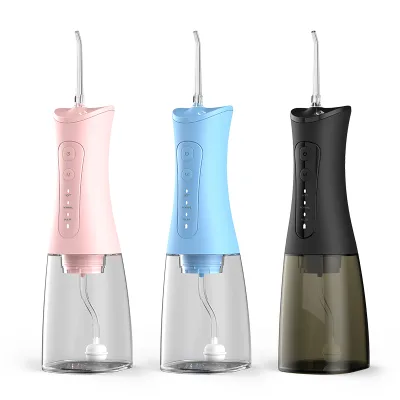
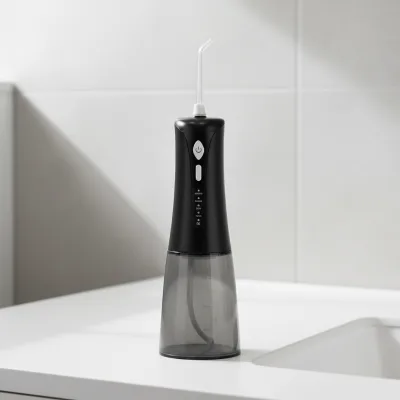
The current market offers a diverse range of oral irrigators with distinct shape profiles, including round and foamed designs, which may impact user ergonomics and storage requirements. Buyers should note that while some products are described as tasteless and featuring a specific shape, others may have different aesthetic finishes or color options such as white, black, pink, and blue. The variation in product names, ranging from "Water Flosser" to "Oral Irrigator," suggests that procurement teams must rely on technical specifications rather than marketing terminology to ensure the correct device is sourced.
Noise levels and operational modes are significant factors when selecting a unit for commercial or retail distribution. Observed data indicates that many devices operate with a running noise level below 70dB, which is a desirable trait for household and clinical settings. Furthermore, the availability of multiple working modes, such as three distinct settings, allows for customization of the cleaning intensity. However, the presence of app-controlled features is not universal, with many models listed as non-connected devices, requiring buyers to align their inventory strategy with the connectivity expectations of their target market.
Technical Specifications to Verify
Verifying the water pulse frequency and pressure levels is essential to ensure the device meets clinical efficacy standards for oral hygiene. The observed listings frequently cite a pulse frequency of 2000 impulses per minute, which serves as a baseline for effective plaque removal. Buyers must confirm that the pressure levels are adjustable or suitable for the intended user demographic, as some products list "Other" pressure levels without specific numerical data. Ensuring the device delivers consistent water flow is crucial for maintaining the product's reputation for cleaning teeth effectively.
The electrical safety and waterproofing ratings must be rigorously checked against the IPX7 standard to prevent water ingress during use. While some specifications list an IPX-7 rating, others may claim IPX5, which offers a lower level of protection against water jets. It is vital to distinguish between these ratings, as IPX7 allows for temporary immersion in water, whereas IPX5 is limited to water jets. Additionally, the power consumption, observed between 5W and 12W, should be verified to ensure compatibility with the intended power supply and to manage energy efficiency in the final product design.
Compliance and Safety Documentation
Although specific certification documents like CE, ISO9001, or ISO13485 are mentioned in background contexts, buyers must request actual proof of compliance rather than assuming their presence. The absence of explicit certification claims in the primary product facts means that suppliers must provide valid test reports to validate the safety of the electrical components and the waterproof integrity of the housing. Procurement teams should not rely on general category knowledge but must demand documented evidence that the specific model number, such as XF1-1H0 or RST-2-C0, has passed the necessary safety assessments for the target market.
Material safety and construction quality are paramount when dealing with devices that come into direct contact with the human body. The observed use of metal materials in some models suggests a need for verification regarding corrosion resistance and biocompatibility, especially given the exposure to water and cleaning solutions. Buyers should ensure that the materials used in the water tank and nozzle are non-toxic and durable. Without explicit material safety certifications in the provided data, it is the buyer's responsibility to audit the supplier's quality management system to confirm that all components meet international safety standards.
Cost Drivers and Commercial Terms
The observed price range of 6.8 to 20 USD indicates significant variation based on features such as battery capacity, reservoir size, and build quality. Buyers must analyze how specific attributes, like a 1000ml reservoir versus a 300ml tank, influence the unit cost and the final retail price point. The inclusion of accessories, such as different nozzle types or carrying cases, may also drive up the price. Understanding these cost drivers is essential for negotiating favorable terms and ensuring that the final product remains competitive in the target market while maintaining healthy profit margins.
Minimum Order Quantities (MOQ) and packaging requirements are critical commercial terms that affect inventory planning and cash flow. The data shows an MOQ range from 1 to 1000 pieces, with some specific listings requiring a minimum of 100 pcs. Packaging varies from simple cartons to color boxes, which impacts both the shipping volume and the unboxing experience for the end consumer. Buyers should clarify whether the packaging includes custom branding options and how the carton dimensions, potentially around 250 x 100 mm, affect logistics costs and warehouse storage efficiency.
Supplier Qualification and Quality Control
Supplier reliability is often indicated by the availability of after-sales services, such as return and replacement policies, which are explicitly mentioned in several listings. A supplier offering a 1-year or 2-year warranty demonstrates confidence in their product's durability and provides a safety net for the buyer against early failures. Buyers should prioritize suppliers who clearly define their warranty terms and support mechanisms, as this reduces the risk of financial loss due to defective units and enhances the overall value proposition for the end customer.
Quality control processes must be validated through on-site audits or third-party inspections, particularly given the variation in product models and specifications. The presence of multiple model numbers, such as CY01 and XF2-1H0, suggests that a single supplier may offer a wide range of products, increasing the complexity of quality assurance. Buyers should verify that the supplier has consistent manufacturing standards across all models and that the production origin, noted as Zhejiang, China, adheres to strict quality protocols. Ensuring that the production line can maintain the IPX7 rating and battery performance across all batches is essential for long-term success.
Long-Term Procurement Checks
Sustaining a successful supply relationship requires regular monitoring of product performance and customer feedback over time. Buyers should establish a system to track return rates and warranty claims, using this data to identify potential quality issues before they escalate. The observation of different battery capacities and power sources suggests that long-term reliability may vary between models, necessitating a proactive approach to inventory management and product lifecycle planning. Continuous engagement with the supplier regarding updates or improvements to the product line is also advisable.
Future-proofing the procurement strategy involves staying informed about evolving standards and technological advancements in the oral care sector. As the market for IPX7 waterproof oral irrigators grows, buyers should anticipate changes in battery technology, charging standards, and water pressure requirements. Maintaining a flexible supply chain that can adapt to new model numbers or updated specifications will ensure that the business remains competitive. Regularly reviewing the supplier's ability to innovate and meet changing consumer demands is a key component of a robust long-term procurement strategy.
FAQs
What is the battery capacity of the ipx7 waterproof oral irrigator?
The device features a 2500mAh battery for extended usage. This capacity supports consistent performance during daily oral care routines. It ensures reliable operation without frequent recharging. The power source is USB compatible for convenient charging options. This specification helps users maintain hygiene with minimal downtime between sessions.
How many working modes does the ipx7 waterproof oral irrigator offer?
It offers three distinct working modes for versatile cleaning. These modes allow users to adjust intensity based on sensitivity. The design supports effective plaque removal and gum massage. This flexibility ensures a personalized oral care experience for different needs. Users can easily switch between modes to suit their daily routine.
Can the ipx7 waterproof oral irrigator be used for outdoor activities?
Yes, it is suitable for both outdoor and household use. The IPX7 waterproof rating ensures durability against water exposure. This feature allows safe use in various environments. The portable design supports convenience during travel or daily activities. Users can rely on its robust construction for consistent performance anywhere.
What is the water tank capacity of the ipx7 waterproof oral irrigator?
The water tank holds 300ml of water for effective cleaning. This capacity is sufficient for multiple uses without frequent refilling. The detachable tank design simplifies filling and cleaning processes. It ensures hygienic operation by allowing easy maintenance. This size balances portability with adequate water supply for thorough rinsing.
What is the warranty period for the ipx7 waterproof oral irrigator?
The product comes with a one-year warranty for peace of mind. This coverage protects against manufacturing defects and ensures quality assurance. Buyers can rely on the manufacturer's support during this period. The warranty reflects confidence in the product's durability and performance. It provides security for users investing in reliable oral care equipment.
What is the charging mode for the ipx7 waterproof oral irrigator?
It uses a Type-C charging mode for modern convenience. This interface ensures fast and reliable power replenishment. The USB power source allows easy charging with common cables. This feature enhances usability by supporting widespread charging accessories. Users benefit from efficient energy management for consistent daily operation.
What is the pulse frequency of the ipx7 waterproof oral irrigator?
The device operates at a pulse frequency of 2000 impulses per minute. This frequency ensures effective water jet action for cleaning. It helps remove food particles and plaque efficiently. The consistent pulse rate supports thorough oral hygiene practices. This specification contributes to the overall effectiveness of the water flossing process.